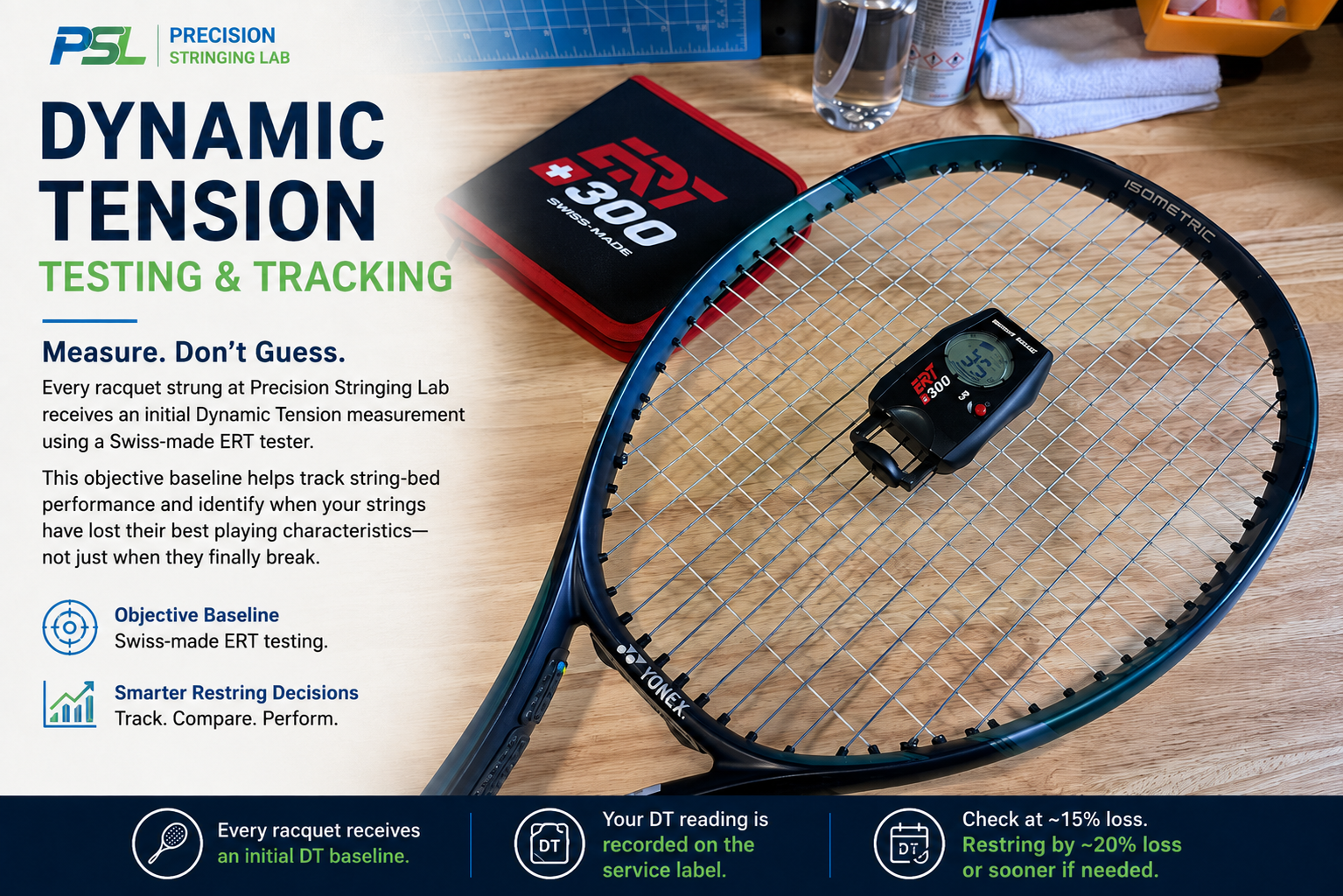

Know When It's Time to Restring
Dynamic Tension (DT):
Measure. Don’t Guess.
Every racquet strung at Precision Stringing Lab receives an initial Dynamic Tension (DT) measurement using a Swiss-made ERT tester. This objective baseline helps track string-bed performance and identify when your strings have lost their best playing characteristics—not just when they finally break.
What Is Dynamic Tension (DT)?
Dynamic Tension (DT) measures the stiffness of your racquet's entire string bed—not just the tension that was set on the stringing machine. It tells us how your strings are performing after installation and use.
Think of a newly strung racquet like a brand-new trampoline. It feels firm, responsive, and predictable. Over time, a trampoline’s springs stretch and become less responsive. Tennis strings behave much the same way, gradually losing tension and elasticity with age and play.

Every Racquet Receives a DT Baseline
Your initial DT reading is recorded on the racquet’s service label, creating a personal reference point for future measurements.
Why Dynamic Tension Matters
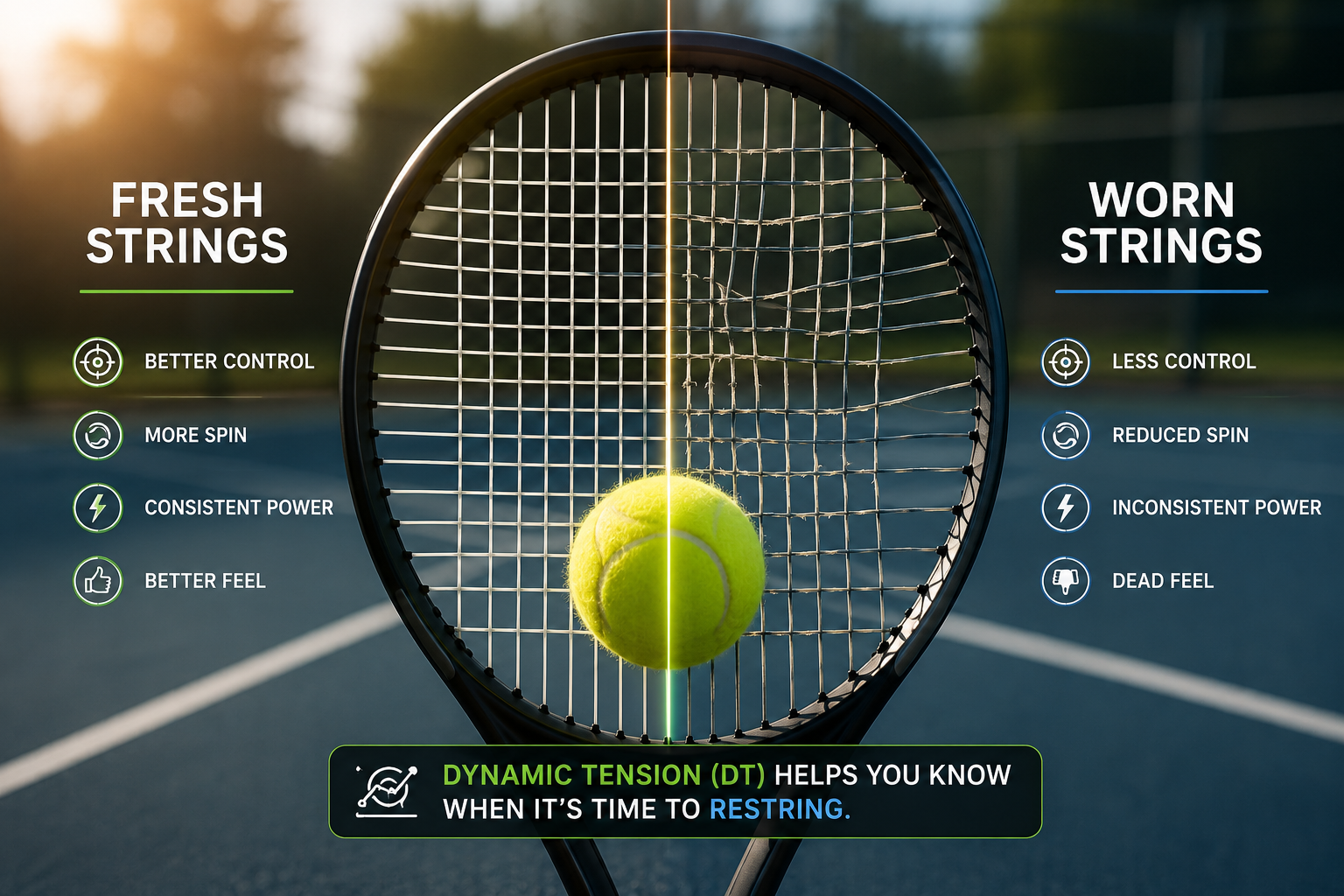
Better Control

More Consistent Spin

Predictable Power

Know When to Restring

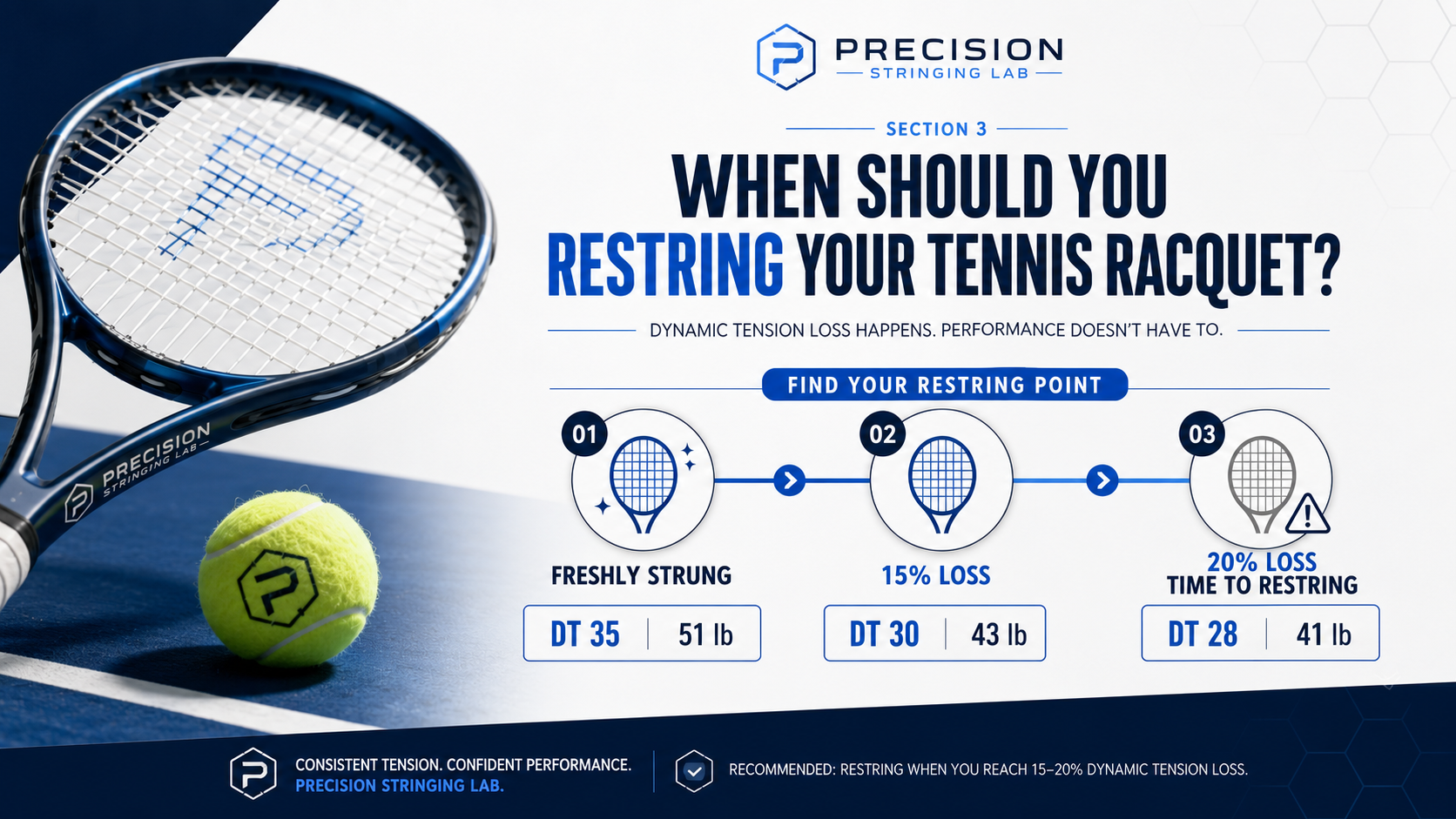
When Should You Restring Your Tennis Racquet?
Your strings begin losing tension and elasticity as soon as the racquet comes off the stringing machine. Some initial settling is normal, but continued use gradually changes the way the string bed responds.
Precision Stringing Lab recommends checking racquet performance after Dynamic Tension has dropped by approximately 15% and considering a restring when the loss reaches approximately 20%.
A restring should also be considered if there is a noticeable loss of spin, comfort, or consistency.
Find Your Restring Point: DT and Approximate Pounds
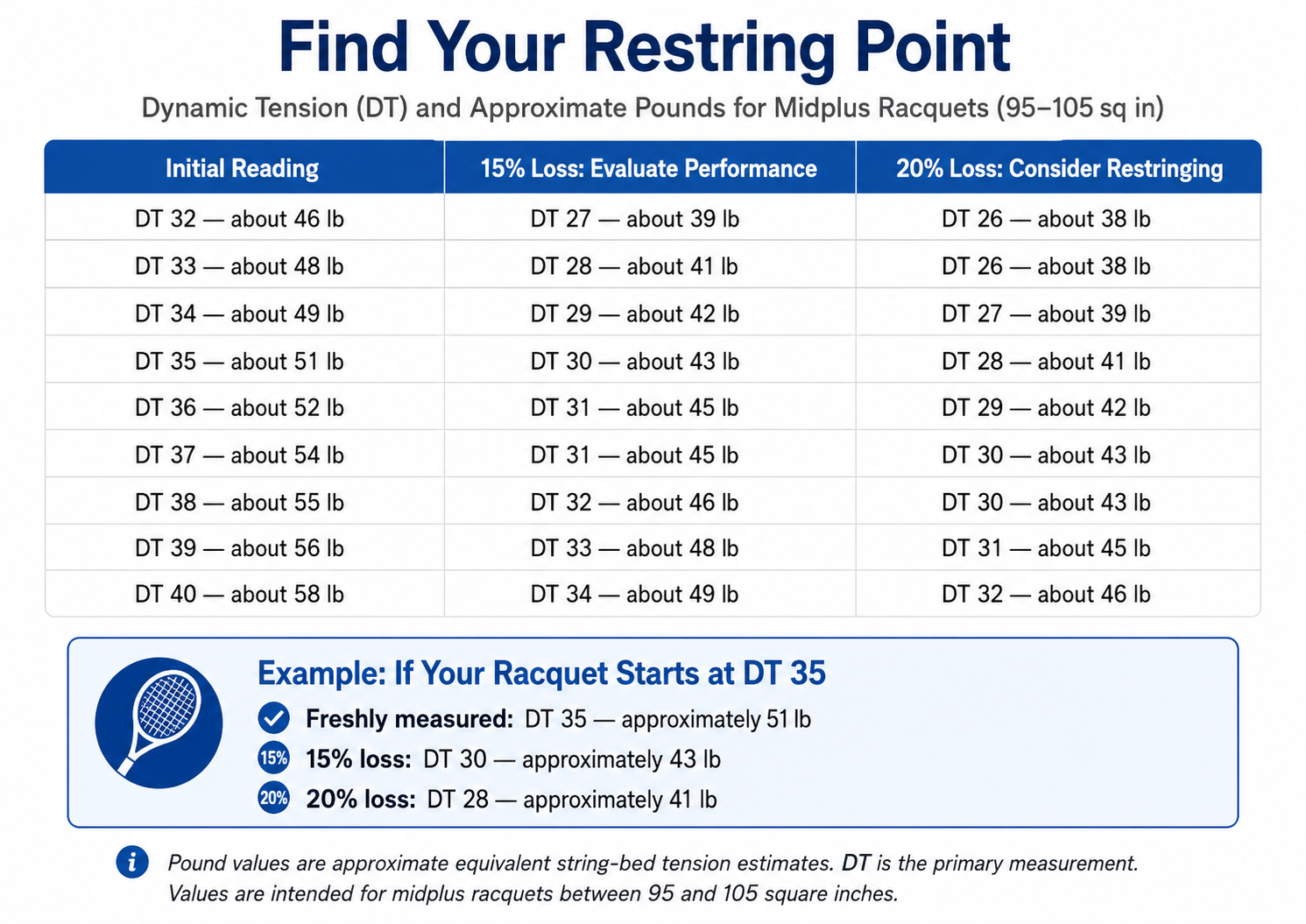
Most players are familiar with string tension in pounds. The chart below translates common Dynamic Tension readings into an approximate pound equivalent for midplus racquets between 95 and 105 square inches, including most 98- and 100-square-inch frames.
It also shows the DT levels at which the string bed has lost approximately 15% and 20% of its initial stiffness.
At Precision Stringing Lab, every racquet is prepared using precision equipment, careful technique, and objective measurement.
Precision Stringing
Your racquet is strung on a state-of-the-art Wilson Baiardo electronic constant-pull machine for accurate, consistent tension throughout the stringing process.
Completed String-Bed Testing
After stringing, a Swiss-made ERT tester measures the stiffness of the completed string bed.
Machine tension tells us how the racquet was strung. Dynamic Tension tells us how the finished string bed actually performs.
The Precision Stringing Lab Difference